Foundation Repair Warranties: Questions to Ask Before You Sign
What a foundation warranty actually covers depends on the fine print: scope, transferability, exclusions and who stands behind it. How to read one.
Read the guide →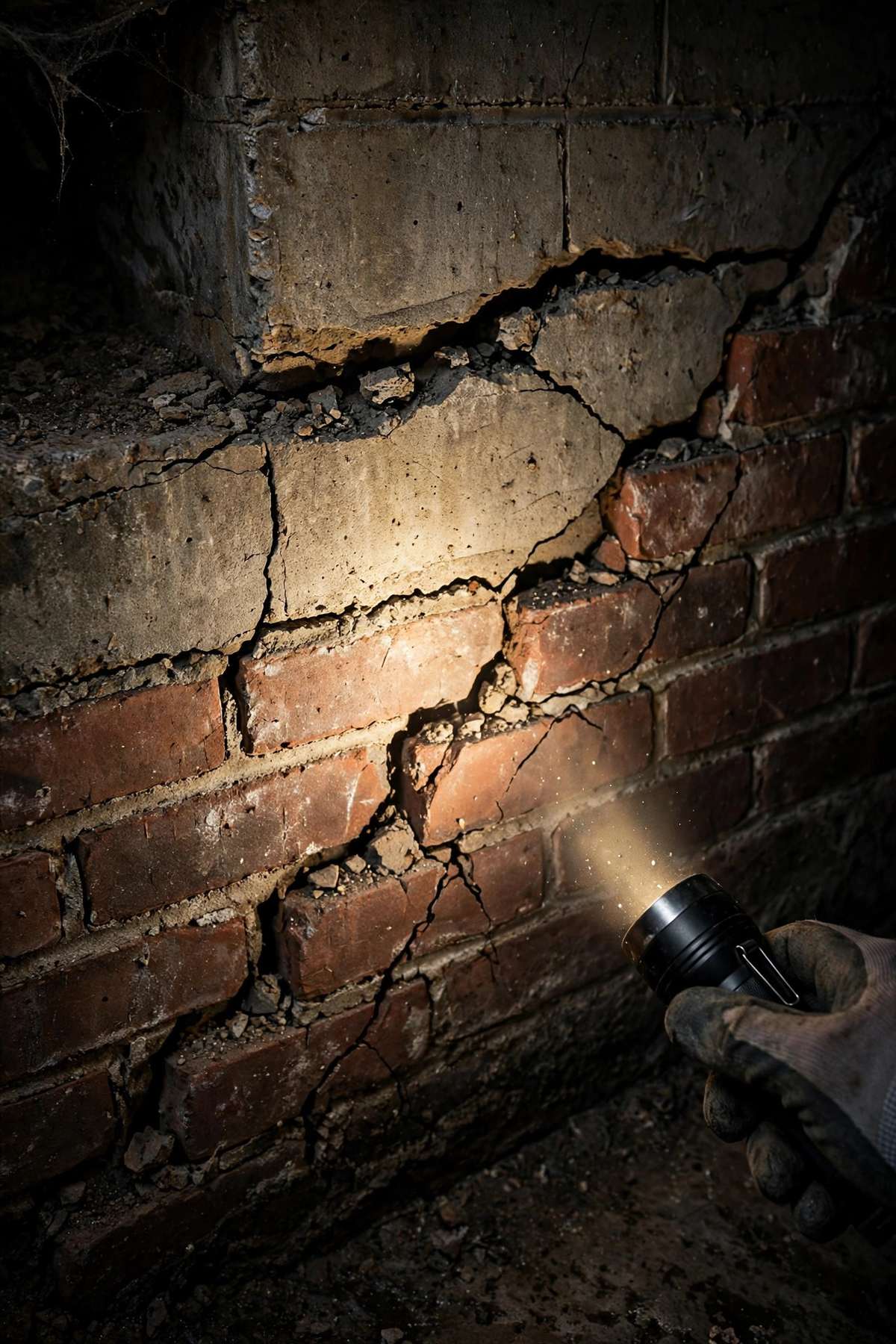
Washington winters are not the harshest in the country, but they are unusually good at one damaging trick: cycling. Temperatures swing above and below freezing repeatedly through the season, and each cycle lets water into cracks and soil, freezes it into expanding ice, and thaws it deeper in. That ratchet — freeze-thaw — worsens foundation cracks, pressures basement walls and heaves shallow concrete. This guide explains the mechanisms, the parts of your home most exposed, and the maintenance that reduces freeze-thaw's leverage before the next cold season.
Water is one of the few substances that expands as it freezes — by roughly a tenth of its volume. In a crack, that expansion wedges the faces apart a fraction; the thaw lets water penetrate farther; the next freeze wedges again. In saturated soil against a basement wall, freezing increases lateral pressure and can drive frost heave under shallow footings, porches and slabs. No sealant defeats physics indefinitely — which is why managing the water itself matters more than chasing each crack.
Horizontal cracks in block walls grow under winter pressure. Mortar in older brick and stone foundations, already softened by age, scales and crumbles faster with each saturated freeze. Exterior concrete — walks, steps, driveway aprons at the foundation — heaves and cracks, then channels meltwater back toward the house. Crawl space vents admit freezing air to pipes and cold floors. Noticing which of these your home shows each spring tells you where its water is getting in.
Autumn is the season to act: clean gutters and confirm downspouts carry roof water well away; regrade or top up soil that has settled against the wall so meltwater sheds outward; seal driveway and walk joints that funnel water to the foundation; and keep snow piled away from the foundation line where practical. Inside, an interior drainage system relieves the groundwater that freeze pressure builds against. None of this is dramatic — freeze-thaw defense is a checklist, done yearly.
Widened cracks that leak, walls that have bowed further, and heaved concrete usually need professional assessment, because freeze-thaw exploits weaknesses it did not create — the crack or pressure came first. Repair order matters: stabilize structure, manage water, then seal and restore surfaces. A local provider through DC Foundation Pros can inspect winter damage in spring, separate the cosmetic from the structural, and put a prioritized plan in writing before the next freeze puts it to the test.
It is also worth remembering how much Washington housing varies within a few blocks. A single street can hold 1890s brick row houses on stone foundations, 1920s colonials on block, post-war homes on poured concrete and recent construction with modern drainage — each aging differently under the same weather. Clay content in the soil changes across the District as well, which is why two neighbors can have genuinely different foundation experiences. Local providers see that variety every week, and their pattern recognition matters: they know which neighborhoods sit on troublesome soil, which eras of construction used which foundation materials, and which repair methods have proven themselves on each. When you read general national advice about foundations, translate it through that local lens — or better, ask a provider who works in Washington to translate it for your address.
For the services behind this guide, start with our foundation services in Washington, DC overview, compare foundation repair with a professional foundation inspection, or go straight to foundation repair in Washington, DC on the homepage.
Whatever you decide, three habits protect homeowners: get the scope in writing with methods and areas named; clarify what happens if hidden conditions are found once work opens the wall or soil; and keep every document — evaluation, contract, diagrams, warranty papers — in one file for the day you sell or refinance. If you would like the first step handled for you, DC Foundation Pros exists for exactly that: call (202) 449-5049, describe your home and what you have noticed, and we will connect you with an independent local foundation provider. There is no obligation — just a shorter path from worry to a professional, documented opinion.
Calling DC Foundation Pros takes a few minutes. We ask what you have noticed — when it started, whether it is changing, which part of the house is involved — and where in Washington you are. We then match you with an independent local provider whose work fits the problem: repair, waterproofing, stabilization, drainage or evaluation. You speak with the provider directly, schedule the inspection at a time that suits you, and receive their findings and any proposal in writing. The decision to proceed, and every term of the work, is between you and the provider. The referral itself is free, the lines are answered around the clock, and there is no obligation at any point — the service exists to replace a week of searching and callbacks with one conversation.

What a foundation warranty actually covers depends on the fine print: scope, transferability, exclusions and who stands behind it. How to read one.
Read the guide →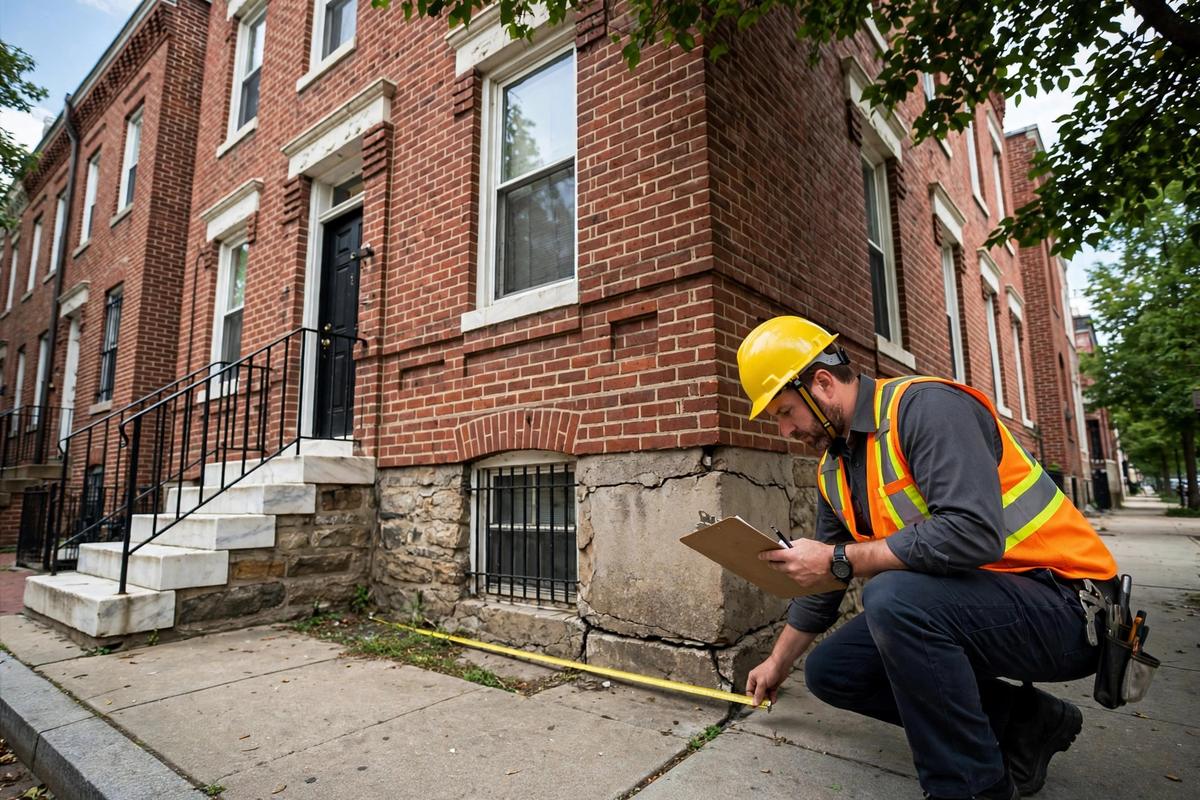
Structural foundation work in the District often needs permits and inspections. What typically requires approval, and how the process usually runs.
Read the guide →
An inspection flags foundation concerns on a house you love. How to evaluate severity, get real numbers, and negotiate from facts.
Read the guide → DC Foundation Pros
Call DC Foundation Pros now and we will connect you with an independent local foundation provider in Washington, DC — no pressure, no obligation. Lines are open 24/7.