Clay Soil and Your Foundation: Why DC Ground Moves
Expansive clay swells when wet and shrinks when dry, and that cycle moves foundations. How soil moisture management protects DC homes.
Read the guide →
Most foundation problems develop over years, but some events demand immediate action: a wall that bulges suddenly, a rapid new crack with doors jamming overnight, a burst of water through the foundation during a storm, or damage after nearby excavation or a fallen tree. Knowing which situations are true emergencies — and what to do in the first hours — protects both the house and the people in it. This guide defines the emergency category honestly, separating it from urgent-but-schedulable problems, and lays out first steps.
Treat as an emergency: visible, sudden wall movement or a wall leaning or bulging noticeably more than before; new wide cracks appearing over days, especially with floors dropping or doors suddenly inoperable; foundation damage from an impact, explosion, fire or excavation collapse nearby; and uncontrolled water entry that threatens electrical systems or is undermining soil at the wall. If you ever feel a structure may be unsafe, leave and call emergency services first — no inspection matters more than occupants.
Photograph everything before touching it, from a safe position. Shut off water at the main if a pipe may be involved, and keep people out of a basement beneath a visibly failing wall. If water is entering, move belongings and valuables up and away, and avoid electrical contact with standing water. Note the timeline — when signs appeared, what the weather and any nearby construction activity were — because a sudden cause is the single most diagnostically valuable fact you can hand a professional.
Active leaks during rain, a crack that is growing month to month, a sump pump that has failed with storms forecast, and doors that have progressively stopped closing are urgent — schedule them in days, not seasons — but they do not require middle-of-the-night intervention. Temporary measures help here: a backup pump or portable pump for water, dated crack marks for movement, and photographs for the provider. This category is where prompt scheduling prevents a problem from graduating into the first one.
DC Foundation Pros answers around the clock: call (202) 449-5049 and describe what you are seeing. We will connect you with an independent local foundation provider suited to the problem — stabilization, waterproofing or structural evaluation. If the situation is severe, say so plainly; describing sudden movement or fast water honestly gets the right response faster than minimizing it. And once the immediate issue is stabilized, insist on the full diagnosis — emergencies have causes, and the cause is what the permanent repair must address.
It is also worth remembering how much Washington housing varies within a few blocks. A single street can hold 1890s brick row houses on stone foundations, 1920s colonials on block, post-war homes on poured concrete and recent construction with modern drainage — each aging differently under the same weather. Clay content in the soil changes across the District as well, which is why two neighbors can have genuinely different foundation experiences. Local providers see that variety every week, and their pattern recognition matters: they know which neighborhoods sit on troublesome soil, which eras of construction used which foundation materials, and which repair methods have proven themselves on each. When you read general national advice about foundations, translate it through that local lens — or better, ask a provider who works in Washington to translate it for your address.
For the services behind this guide, start with our foundation services in Washington, DC overview, compare foundation repair with a professional foundation inspection, or go straight to foundation repair in Washington, DC on the homepage.
Whatever you decide, three habits protect homeowners: get the scope in writing with methods and areas named; clarify what happens if hidden conditions are found once work opens the wall or soil; and keep every document — evaluation, contract, diagrams, warranty papers — in one file for the day you sell or refinance. If you would like the first step handled for you, DC Foundation Pros exists for exactly that: call (202) 449-5049, describe your home and what you have noticed, and we will connect you with an independent local foundation provider. There is no obligation — just a shorter path from worry to a professional, documented opinion.
Calling DC Foundation Pros takes a few minutes. We ask what you have noticed — when it started, whether it is changing, which part of the house is involved — and where in Washington you are. We then match you with an independent local provider whose work fits the problem: repair, waterproofing, stabilization, drainage or evaluation. You speak with the provider directly, schedule the inspection at a time that suits you, and receive their findings and any proposal in writing. The decision to proceed, and every term of the work, is between you and the provider. The referral itself is free, the lines are answered around the clock, and there is no obligation at any point — the service exists to replace a week of searching and callbacks with one conversation.
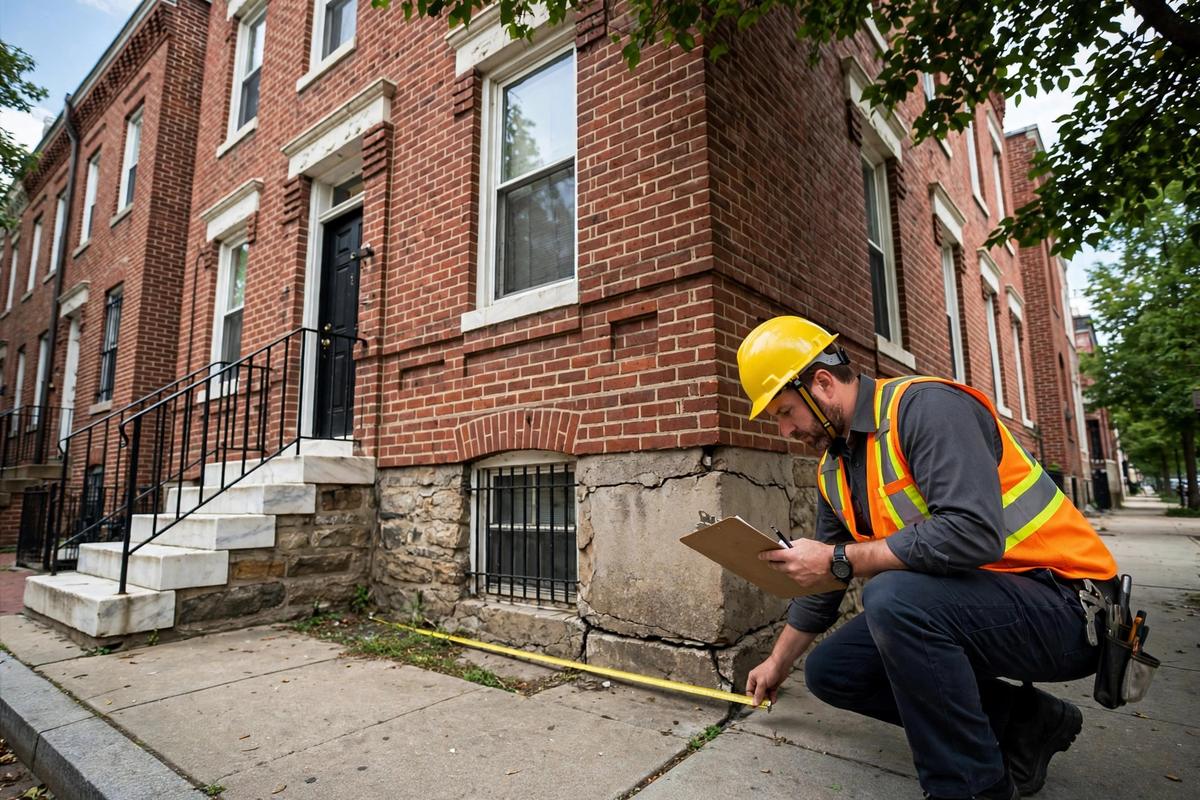
Expansive clay swells when wet and shrinks when dry, and that cycle moves foundations. How soil moisture management protects DC homes.
Read the guide →
Crack mapping, floor elevation checks, drainage review and a written report — step by step through a professional foundation inspection.
Read the guide →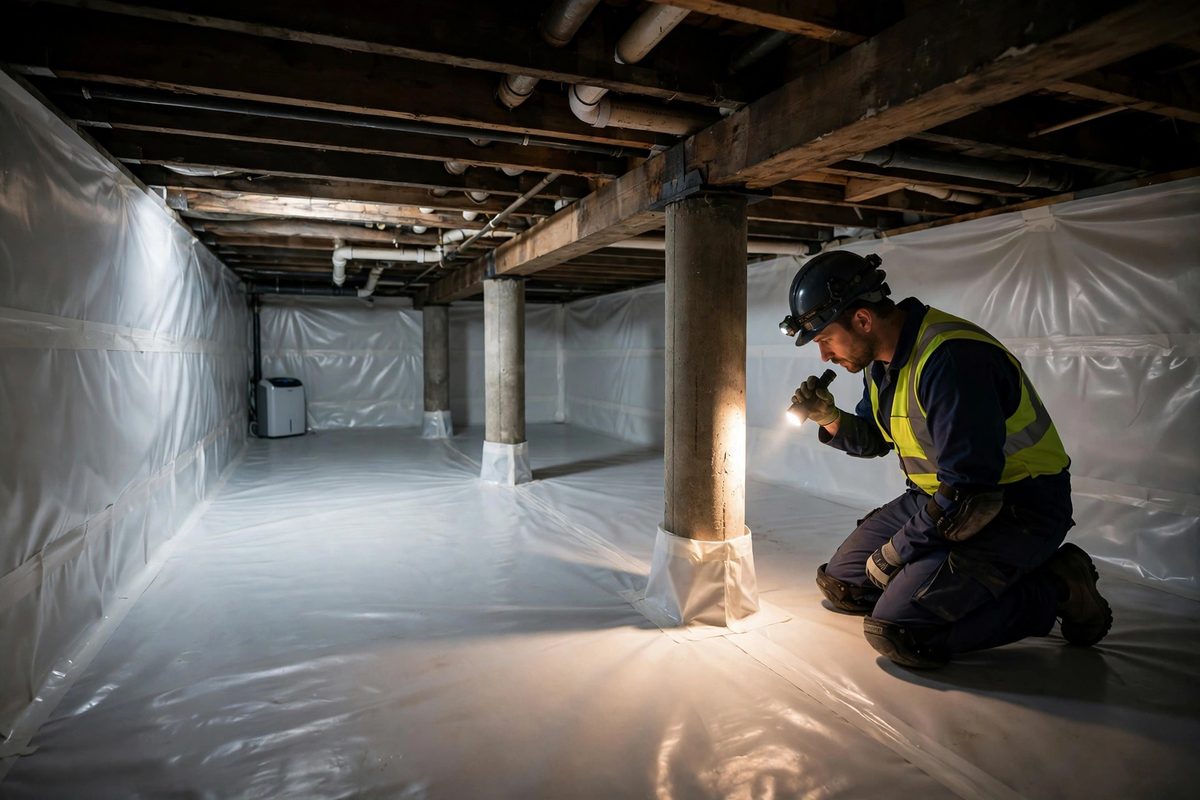
Vapor barriers, sealed vents, drainage and dehumidification — how encapsulation turns a damp crawl space into a clean, dry part of the house.
Read the guide → DC Foundation Pros
Call DC Foundation Pros now and we will connect you with an independent local foundation provider in Washington, DC — no pressure, no obligation. Lines are open 24/7.