Emergency Foundation Problems: What Counts and What to Do First
Sudden cracks, a wall that moves, water pouring in — which foundation problems are genuine emergencies and the first steps to take.
Read the guide →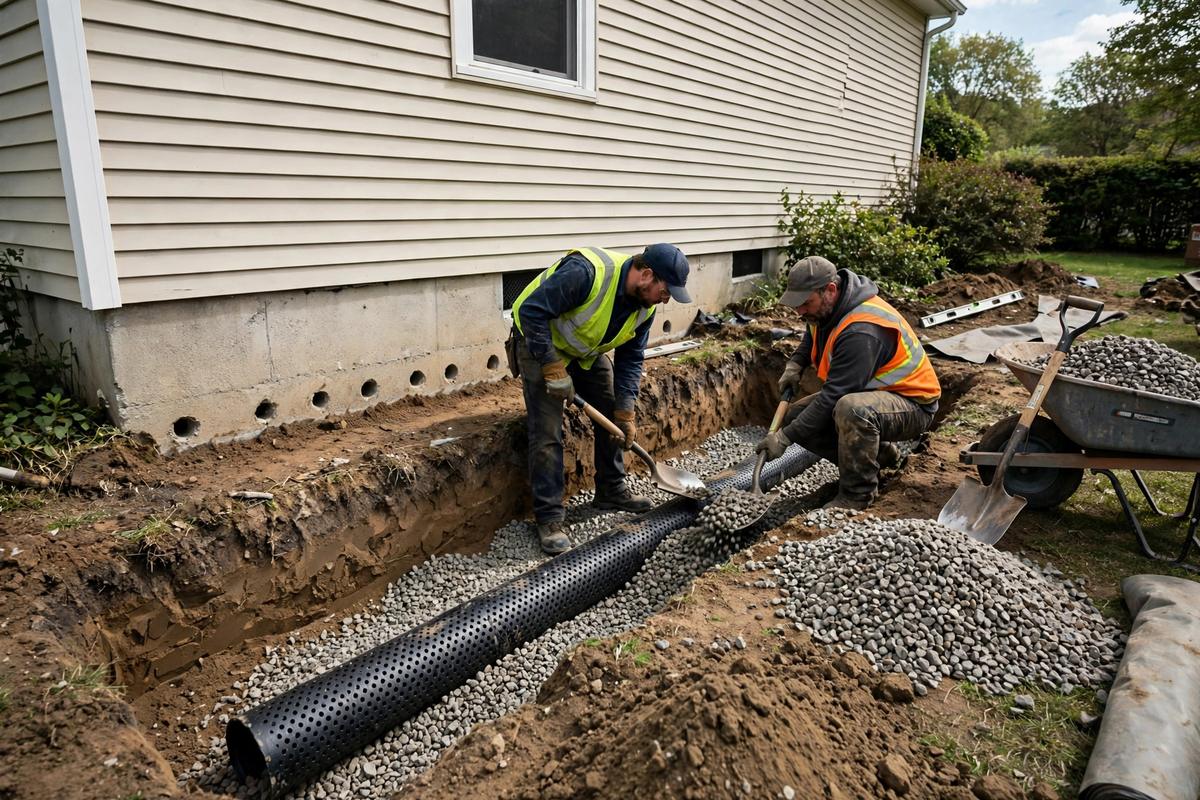
Ask foundation professionals what damages foundations most and the answer is rarely age — it is water in the wrong place, year after year. Most of that water is managed, or mismanaged, at the surface: by gutters, grading and drainage around the house. The encouraging news is that drainage problems announce themselves visibly, long before they become structural ones. This guide teaches you to read those signs around your Washington home, understand what each is doing to the foundation, and know which corrections are simple maintenance and which need a drainage professional.
Walk the perimeter after rain. Water standing against the foundation an hour after the rain stops, soil or mulch washed away in channels, and a dark moisture line climbing the wall all say the ground is delivering water to the house. Inside, the mirror image appears: seepage at the same wall, efflorescence patterns, and a basement that gets wet from the top of the wall down after storms rather than from the floor up in long wet spells — surface water and groundwater leave different signatures.
Roof water is concentrated water: a single downspout can deliver the runoff of a large roof area to one point. When that point is the foundation — because the extension fell off, the underground line clogged, or the gutter overflows its end — the soil at the wall saturates, pressures rise against basement walls, and clay soil swells and shrinks in exaggerated cycles. Restoring downspout discharge several feet from the house, with clear lines, is among the highest-value maintenance a homeowner can do.
Soil settles against foundations over time, silently reversing the original slope; driveways and walks that tilt toward the house become ramps for water; and in DC's attached housing, a neighbor's regrading or new patio can redirect shared runoff onto your wall. Corrections range from regrading and swales to channel drains and French drains that intercept and export water. The principle is always the same: give water an easier path away from the house than toward it — and verify the fix in the next heavy rain.
Persistent pooling, water entering despite corrected gutters, soggy side yards between row houses, and any drainage problem paired with cracks or wall movement call for a designed solution — drainage runs, catch basins and discharge planning sized to your lot. A provider through DC Foundation Pros can assess the whole water picture — roof, surface and subsurface — and design corrections that protect the foundation instead of moving the problem to the next wall.
Washington adds local wrinkles to every foundation topic on this page. Much of the District's housing predates poured-concrete foundations: brick and rubble-stone foundation walls, shared party walls in row houses, and cellars that were never designed as living space now serve as finished lower levels. Soils across much of the city carry clay that swells when wet and shrinks in drought, and winters cycle through freeze and thaw often enough to ratchet small cracks wider season after season. Intense summer downpours complete the picture, delivering roof and yard water faster than aging drainage can move it. Advice that ignores those conditions misses the point — the right choice for a Capitol Hill row house is not automatically the right choice for a detached home in Chevy Chase, and any provider worth hiring will ask about your specific house, its era and its walls before recommending a direction.
For the services behind this guide, start with our foundation services in Washington, DC overview, compare foundation repair with a professional foundation inspection, or go straight to foundation repair in Washington, DC on the homepage.
Nearly every foundation question eventually becomes a choice between repair, stabilization, waterproofing or monitoring — and the wrong sequence wastes money. Cosmetic repairs made before movement is stabilized simply fail again; waterproofing installed against the wrong water source disappoints; piers installed where drainage correction would have sufficed overspend the problem. The reliable order is diagnosis first: measured elevations, mapped cracks, an identified water source, and a written statement of whether the condition is active or historical. With that in hand, the options price themselves honestly, and you can compare providers on identical scope. Insist on documentation rather than adjectives — a provider who measures and photographs is a provider whose recommendation you can test.
Calling DC Foundation Pros takes a few minutes. We ask what you have noticed — when it started, whether it is changing, which part of the house is involved — and where in Washington you are. We then match you with an independent local provider whose work fits the problem: repair, waterproofing, stabilization, drainage or evaluation. You speak with the provider directly, schedule the inspection at a time that suits you, and receive their findings and any proposal in writing. The decision to proceed, and every term of the work, is between you and the provider. The referral itself is free, the lines are answered around the clock, and there is no obligation at any point — the service exists to replace a week of searching and callbacks with one conversation.

Sudden cracks, a wall that moves, water pouring in — which foundation problems are genuine emergencies and the first steps to take.
Read the guide →
What a foundation warranty actually covers depends on the fine print: scope, transferability, exclusions and who stands behind it. How to read one.
Read the guide →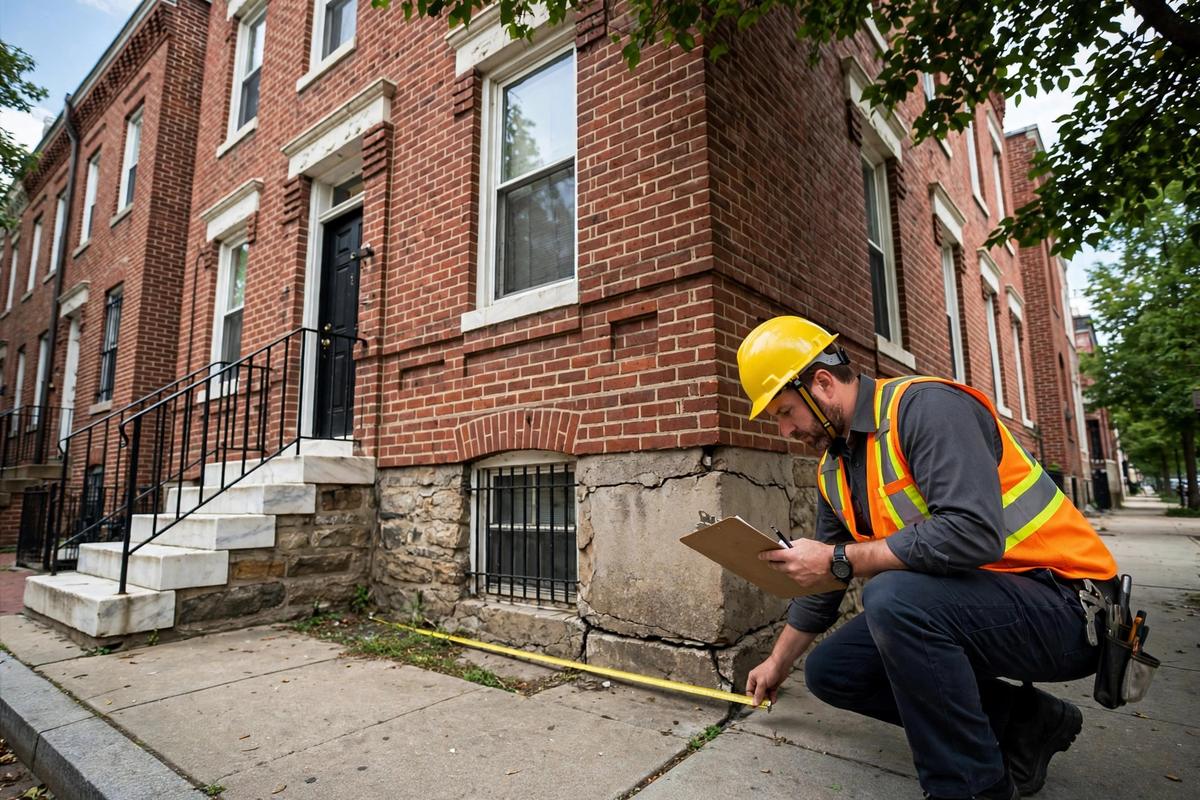
An inspection flags foundation concerns on a house you love. How to evaluate severity, get real numbers, and negotiate from facts.
Read the guide → DC Foundation Pros
Call DC Foundation Pros now and we will connect you with an independent local foundation provider in Washington, DC — no pressure, no obligation. Lines are open 24/7.