Emergency Foundation Problems: What Counts and What to Do First
Sudden cracks, a wall that moves, water pouring in — which foundation problems are genuine emergencies and the first steps to take.
Read the guide →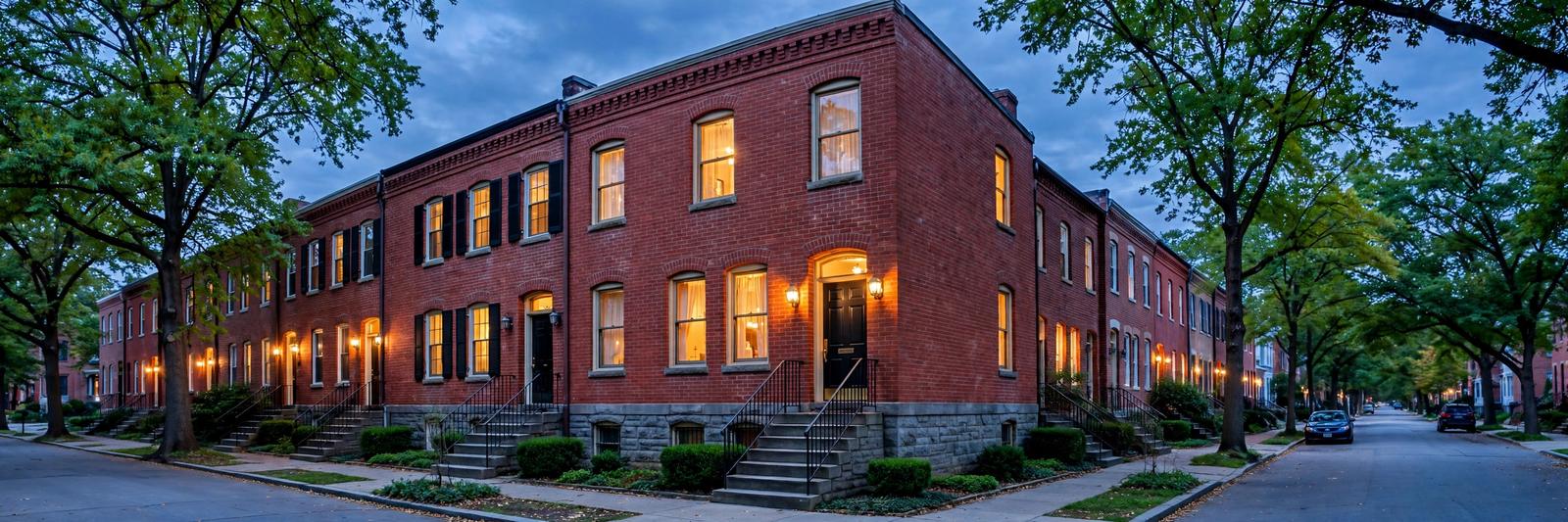
The big shade tree near the house inspires a persistent worry: are its roots cracking the foundation? The honest answer is nuanced. Roots seldom generate the force to crack a sound, modern foundation — but in clay soil country, tree moisture demand can shrink the ground under a footing, and roots enthusiastically exploit pipes and cracks that already leak. Washington's mature street trees make this a live question for many homeowners. This guide separates the myth from the mechanisms, and outlines proportionate responses.
Tree roots grow toward moisture and oxygen, thickening slowly over years. Against a sound foundation wall their pressure is modest compared with saturated soil loads, and direct cracking of intact concrete by roots is uncommon. What roots do superbly is find existing weaknesses: a leaking sewer or water line becomes a root highway, joints in clay pipe are invaded, and a root mass under a shallow walk or stoop can lift light concrete that a house foundation would shrug off. The tree is usually an accomplice, not the originator.
In expansive clay, a large tree near the house is a powerful pump: in dry months its root zone pulls moisture from the soil, which shrinks — potentially dropping the ground supporting a nearby footing unevenly. This is subsidence by desiccation, and it explains settlement patterns that worsen in drought and cluster on the tree side of the house. Distance, tree size and species' water demand all matter, which is why assessment is site-specific rather than a slogan about all trees.
Settlement cracks and door racking concentrated on the side nearest a large tree, worsening through dry summers and easing after wet periods, fit the moisture story. Seasonal clay movement without a tree can look similar, however, and plenty of foundation problems — poor drainage, original shallow footings, deteriorated masonry — have nothing to do with vegetation. A proper evaluation maps elevations, checks soil moisture patterns and inspects drains before blaming or clearing the tree.
Options range from doing nothing (stable, minor, historical movement), to moisture management and root barriers, to stabilizing the footing with piers that bypass the active soil zone entirely — often the definitive answer where desiccation is established. Removing a mature tree is a major step with its own soil consequences (soil rehydrates and can heave afterward) and should follow professional assessment, including an arborist where the tree's health is in question. A local provider through DC Foundation Pros can evaluate whether your tree is a suspect, a bystander or an alibi — with measurements, not folklore.
It is also worth remembering how much Washington housing varies within a few blocks. A single street can hold 1890s brick row houses on stone foundations, 1920s colonials on block, post-war homes on poured concrete and recent construction with modern drainage — each aging differently under the same weather. Clay content in the soil changes across the District as well, which is why two neighbors can have genuinely different foundation experiences. Local providers see that variety every week, and their pattern recognition matters: they know which neighborhoods sit on troublesome soil, which eras of construction used which foundation materials, and which repair methods have proven themselves on each. When you read general national advice about foundations, translate it through that local lens — or better, ask a provider who works in Washington to translate it for your address.
For the services behind this guide, start with our foundation services in Washington, DC overview, compare foundation repair with a professional foundation inspection, or go straight to foundation repair in Washington, DC on the homepage.
Whatever you decide, three habits protect homeowners: get the scope in writing with methods and areas named; clarify what happens if hidden conditions are found once work opens the wall or soil; and keep every document — evaluation, contract, diagrams, warranty papers — in one file for the day you sell or refinance. If you would like the first step handled for you, DC Foundation Pros exists for exactly that: call (202) 449-5049, describe your home and what you have noticed, and we will connect you with an independent local foundation provider. There is no obligation — just a shorter path from worry to a professional, documented opinion.
Calling DC Foundation Pros takes a few minutes. We ask what you have noticed — when it started, whether it is changing, which part of the house is involved — and where in Washington you are. We then match you with an independent local provider whose work fits the problem: repair, waterproofing, stabilization, drainage or evaluation. You speak with the provider directly, schedule the inspection at a time that suits you, and receive their findings and any proposal in writing. The decision to proceed, and every term of the work, is between you and the provider. The referral itself is free, the lines are answered around the clock, and there is no obligation at any point — the service exists to replace a week of searching and callbacks with one conversation.

Sudden cracks, a wall that moves, water pouring in — which foundation problems are genuine emergencies and the first steps to take.
Read the guide →
Shared party walls, stone and brick foundations, tight lots and a century of additions — the foundation issues specific to DC row houses.
Read the guide →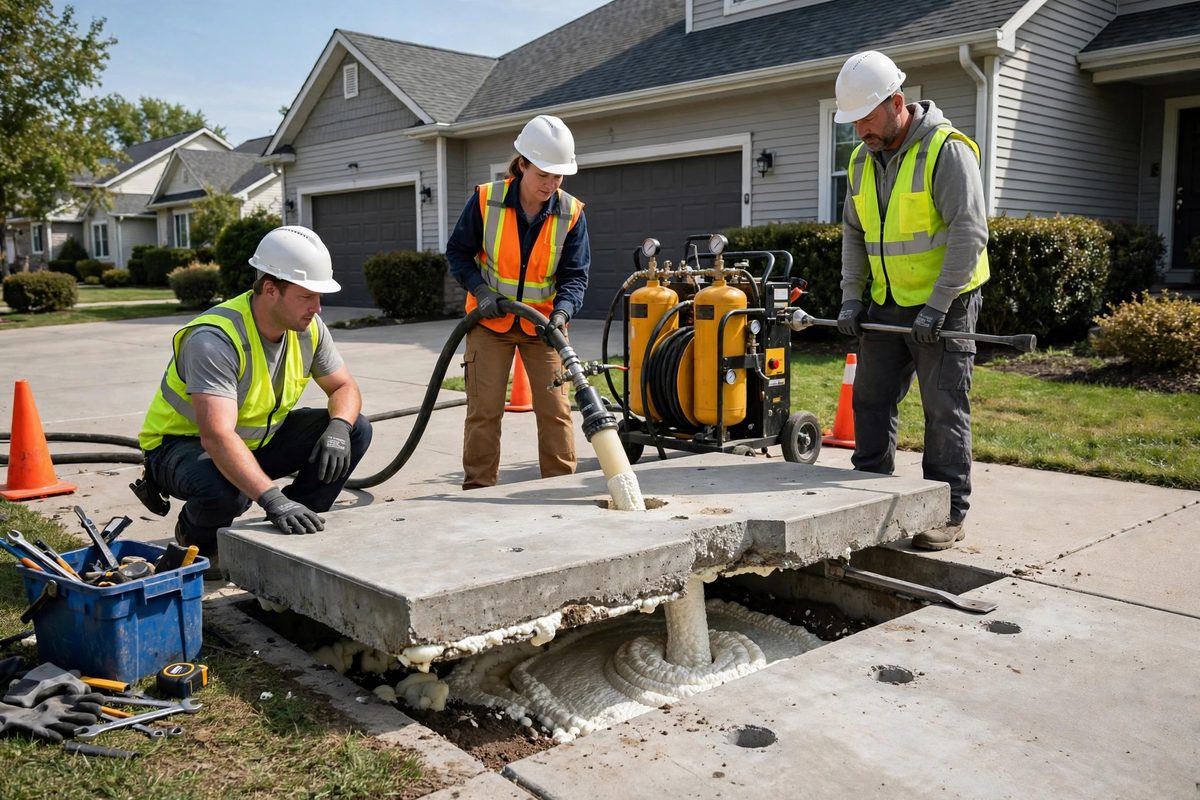
Both methods raise sunken slabs by filling the void beneath. How they differ in material, holes, weight and longevity — and when replacement beats both.
Read the guide → DC Foundation Pros
Call DC Foundation Pros now and we will connect you with an independent local foundation provider in Washington, DC — no pressure, no obligation. Lines are open 24/7.