Freeze-Thaw Damage: How DC Winters Attack Foundations
Water expands when it freezes, and that simple fact pries at cracks, soil and mortar all winter. How freeze-thaw works and how to blunt it.
Read the guide →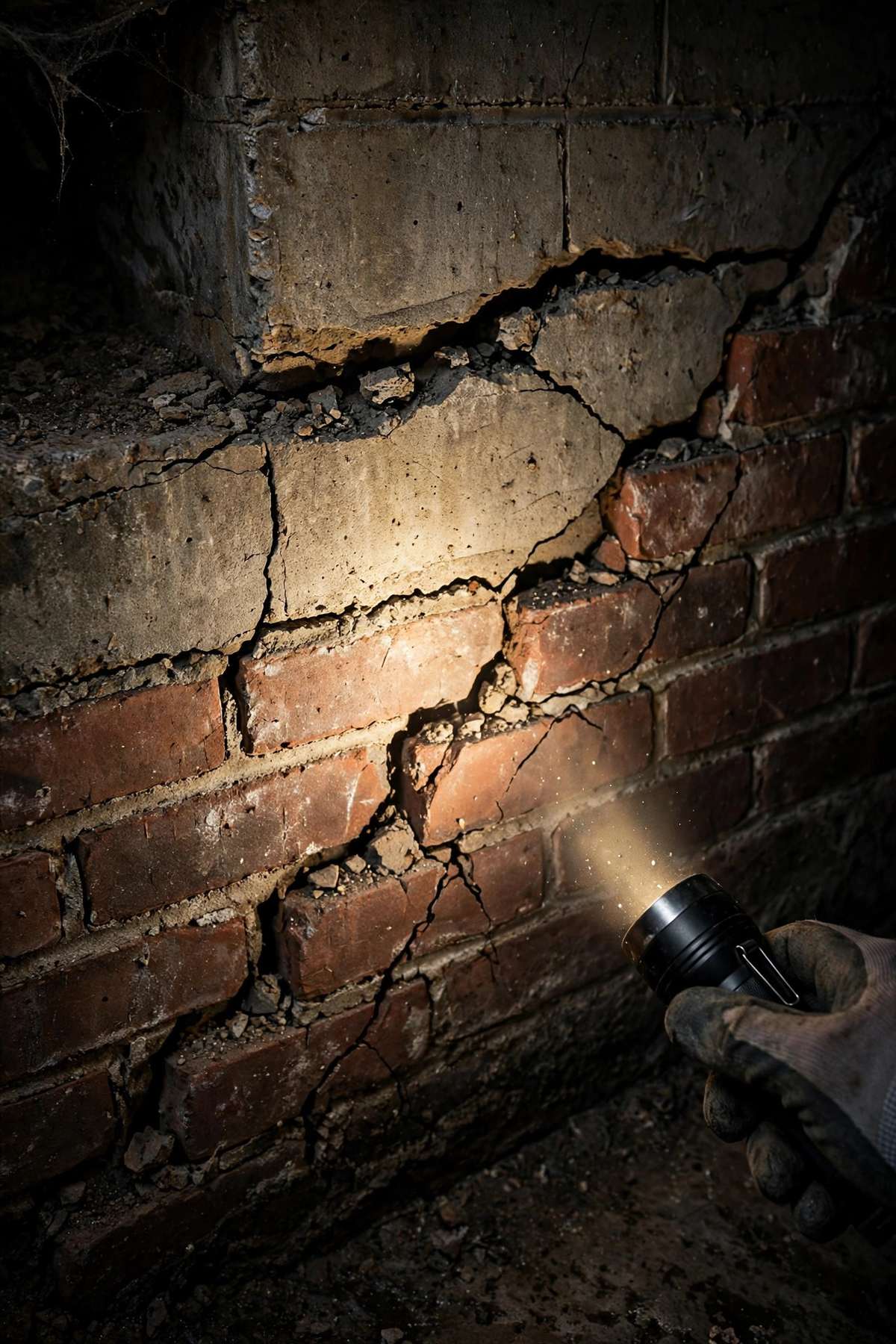
Once a basement wall has bowed inward under soil pressure, two reinforcement families dominate the repair conversation: carbon fiber straps bonded to the inside face of the wall, and wall anchors that tie the wall back to stable soil in the yard. Both are legitimate engineering approaches; they differ in how they resist pressure, what they require from your property, and whether they can move a wall back. This comparison explains the mechanics of each, the situations that favor one over the other, and the questions to ask before choosing.
Carbon fiber straps are epoxied vertically to the interior wall surface, often with mechanical ties at the top and bottom, converting the wall into a reinforced panel that resists further inward movement. The material is extraordinarily strong in tension, adds almost no thickness — walls can be painted or finished over — and requires no excavation. It stabilizes; it does not straighten. It suits walls whose displacement is still modest and whose blocks or concrete are sound enough to bond to.
An anchor system drives a steel rod through the wall to an earth anchor plate buried in competent soil several feet from the house, then fastens a wall plate inside. Tightening the system resists further movement, and staged tightening over time can sometimes recover some of the wall's plumb. Anchors handle larger displacements than straps but require yard access and soil room — a real constraint for DC row houses and tight urban lots, where the anchor zone may sit under a neighbor's property, a porch or a street tree.
The decision usually follows three facts: how far the wall has moved (measured, not guessed), whether exterior access exists, and whether straightening matters or stabilization suffices. Deteriorated or severely displaced walls may exceed both options and need bracing or partial rebuilding. Drainage correction belongs in every plan — both systems hold a wall against pressure that good water management can reduce at the source.
Ask for the measured displacement, the design spacing of straps or anchors, what the provider's documentation covers, and how stability will be verified afterward. Be wary of a company that sells only one system and discovers it is always the fit. A provider reached through DC Foundation Pros can measure your wall, explain which options your lot and wall condition genuinely support, and put the recommendation and its reasoning in writing.
It is also worth remembering how much Washington housing varies within a few blocks. A single street can hold 1890s brick row houses on stone foundations, 1920s colonials on block, post-war homes on poured concrete and recent construction with modern drainage — each aging differently under the same weather. Clay content in the soil changes across the District as well, which is why two neighbors can have genuinely different foundation experiences. Local providers see that variety every week, and their pattern recognition matters: they know which neighborhoods sit on troublesome soil, which eras of construction used which foundation materials, and which repair methods have proven themselves on each. When you read general national advice about foundations, translate it through that local lens — or better, ask a provider who works in Washington to translate it for your address.
For the services behind this guide, start with our foundation services in Washington, DC overview, compare foundation repair with a professional foundation inspection, or go straight to foundation repair in Washington, DC on the homepage.
Whatever you decide, three habits protect homeowners: get the scope in writing with methods and areas named; clarify what happens if hidden conditions are found once work opens the wall or soil; and keep every document — evaluation, contract, diagrams, warranty papers — in one file for the day you sell or refinance. If you would like the first step handled for you, DC Foundation Pros exists for exactly that: call (202) 449-5049, describe your home and what you have noticed, and we will connect you with an independent local foundation provider. There is no obligation — just a shorter path from worry to a professional, documented opinion.
Calling DC Foundation Pros takes a few minutes. We ask what you have noticed — when it started, whether it is changing, which part of the house is involved — and where in Washington you are. We then match you with an independent local provider whose work fits the problem: repair, waterproofing, stabilization, drainage or evaluation. You speak with the provider directly, schedule the inspection at a time that suits you, and receive their findings and any proposal in writing. The decision to proceed, and every term of the work, is between you and the provider. The referral itself is free, the lines are answered around the clock, and there is no obligation at any point — the service exists to replace a week of searching and callbacks with one conversation.
Water expands when it freezes, and that simple fact pries at cracks, soil and mortar all winter. How freeze-thaw works and how to blunt it.
Read the guide →
Soil pressure bows basement walls inward over years. How to measure the movement, and when carbon fiber, anchors or bracing are the right fix.
Read the guide →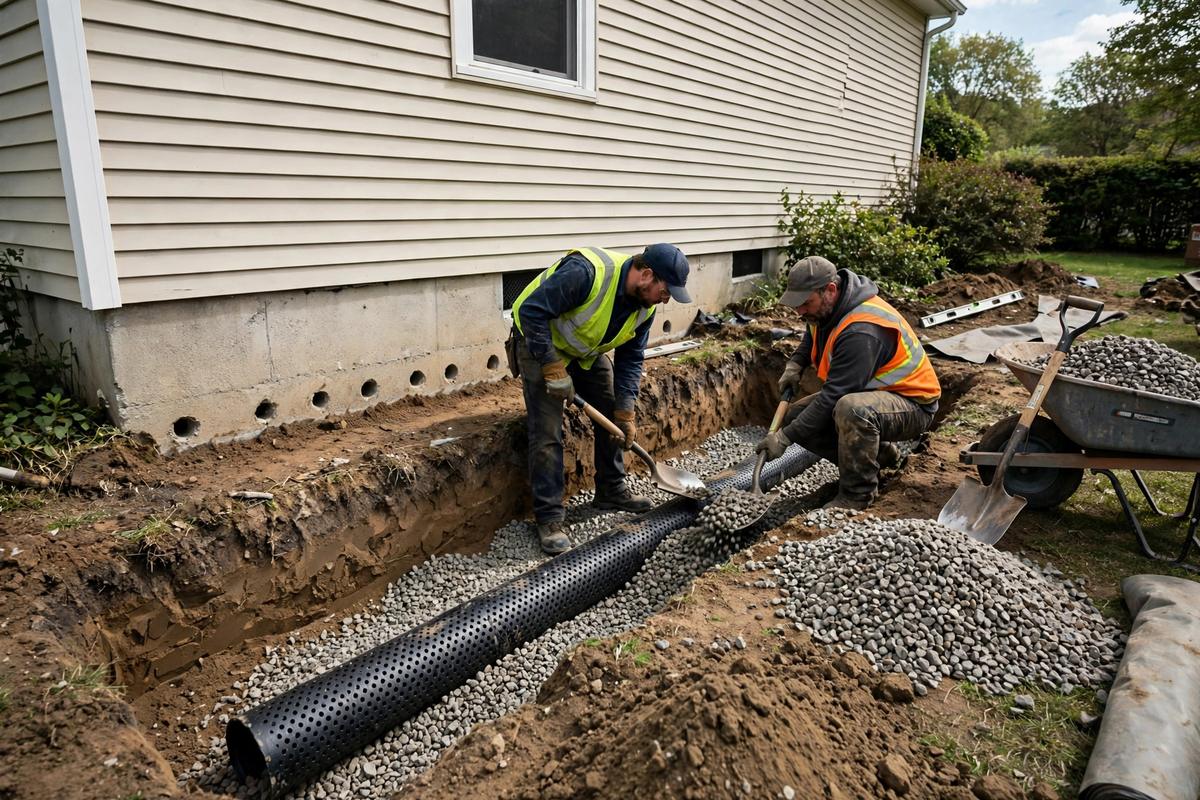
Pooling water, eroded soil, overflowing gutters and soggy ground at the wall: reading the drainage signs around your home before they become foundation damage.
Read the guide → DC Foundation Pros
Call DC Foundation Pros now and we will connect you with an independent local foundation provider in Washington, DC — no pressure, no obligation. Lines are open 24/7.